

Nomini casino Plinko game
Introduction
Plinko looks simple enough to explain in one sentence: you drop a ball from the top of the board, it bounces through a field of pegs, and it lands in a multiplier slot at the bottom. But in practice, Nomini casino Plinko is more interesting than that description suggests. I see it as one of those rare casino games where the interface is almost minimal, while the actual player experience can swing from calm and repetitive to tense and highly uneven in a matter of minutes.
That contrast is exactly why Plinko keeps attracting attention. On the surface, it does not ask the player to learn paylines, high value casino bonuses at Nomini Casino rounds, card values, or table strategy. You choose a stake, set the number of rows in many versions, select a risk level, and release the ball. Yet the outcome pattern can feel dramatically different depending on those settings. The same board can produce a long sequence of small returns, then suddenly hit a high multiplier that changes the whole session.
For players in Canada exploring Nomini casino Plinko, the key question is not whether the game is easy to understand. It is. The more useful question is what that simplicity means in real play: how fast the session moves, where the tension comes from, how the risk profile changes, and whether this format suits your style better than slots or online blackjack at Nomini Casino. That is what I want to break down here in practical terms.
What Plinko is and why it draws so much attention
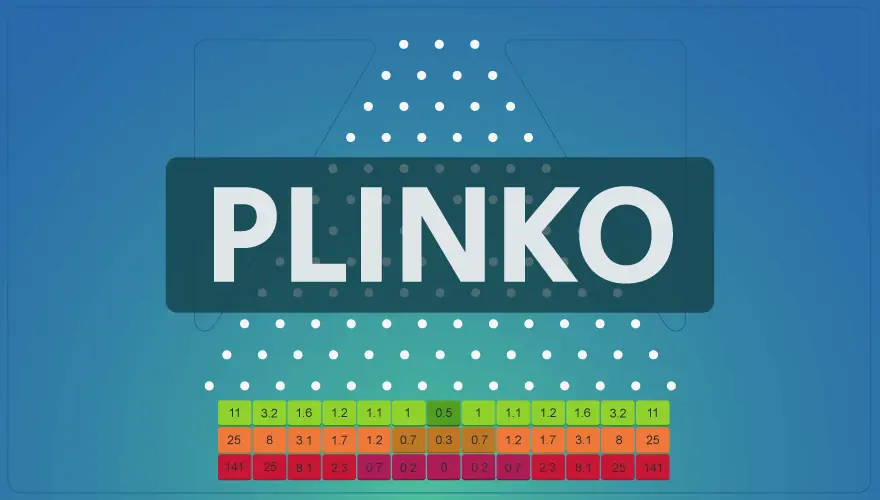
Plinko belongs to a category of chance-based casino games that rely on visible physics-style movement rather than reels or cards. The ball drops from the top, collides with pins, shifts left or right, and eventually reaches one of several payout zones. The visual logic is intuitive. Even a first-time player can follow what is happening without a tutorial.
That accessibility is a major part of its appeal, but not the whole story. What makes Plinko stand out is the way it turns randomness into something you can watch unfold step by step. In a slot, the result appears as soon as the reels stop. In Plinko, the suspense is stretched across the full descent. Every bounce creates a tiny moment of expectation. You know the final result is already governed by chance, but the path still feels dramatic.
Another reason the format became so noticeable is that it delivers a very clear relationship between risk level and possible returns. Players do not need to decode a complex paytable to understand the trade-off. Lower-risk settings usually cluster more outcomes around modest multipliers. Higher-risk settings flatten the frequency of decent returns and push more value toward rare top-end outcomes. In other words, the game makes variance visible.
I would also point out one detail that often gets overlooked: Plinko is one of the few casino formats where the player can feel in control without actually controlling the outcome. Choosing rows, stake size, and risk setting creates the impression of shaping the session, even though the ball’s path remains random. That balance between agency and uncertainty is one of the reasons the game holds attention so well. For a closer look at the games library, Aviator casino game at Nomini Casino sorts the titles by theme and pace.
How the Plinko mechanic actually works
At its core, the mechanic is straightforward. A ball starts at the top of the board and falls downward through staggered pegs. Each contact deflects the ball left or right. After multiple deflections, it lands in a slot at the bottom, and that slot carries a multiplier. Your return is your stake multiplied by the value of the slot where the ball finishes.
In many Plinko versions, including the style players expect to see at modern online casinos, the core settings usually include:
- Bet size — the amount risked on each drop.
- Rows — the height of the board and the number of decision points during the ball’s descent.
- Risk level — a setting that changes the payout distribution across the board.
Rows matter because they influence how wide the board becomes and how outcomes are distributed. With more rows, there are generally more possible landing positions. This can create a broader spread between common low multipliers near the center and rare high multipliers near the edges. The visual change may seem modest, but the practical effect on the session can be significant.
Risk level matters even more. On low risk, the distribution is usually gentler. You tend to see more frequent modest returns and fewer extreme outcomes. On high risk, the board becomes harsher. Most drops may return little or nothing meaningful, while a small number of edge hits carry the potential for a much larger multiplier. That is where many players misread the game. They see a simple board, but they are actually choosing between very different statistical experiences.
One of the most useful ways to understand Plinko is to stop thinking of the ball as “nearly making it” to a high multiplier. The path may look close, but closeness has no predictive value. The board creates a visual story, not a pattern the player can exploit. This is a crucial practical point. The movement is easy to watch, but it should not be mistaken for a system that can be read or timed.
Why the game feels engaging and how the session rhythm develops
The rhythm of a Plinko session is one of its defining traits. There are no long animations, no reel intros, and no feature rounds interrupting the flow. Each drop resolves quickly, and the player can move to the next one almost instantly. This creates a fast cycle of expectation and result.
That speed can work in two opposite ways. For some players, it makes the experience clean and satisfying. There is little downtime, and every decision is obvious. For others, the same pace can become dangerous because the session can accelerate before they fully register how much they have spent. Plinko is not complicated, but it can be deceptively fast.
What keeps the format interesting is the gap between repetition and surprise. The action loop never changes much: drop, bounce, land, repeat. Yet the emotional tone of the session can change sharply depending on the sequence of multipliers. A run of center-landings can feel flat and predictable. Then one edge hit can suddenly make the game feel brilliant again. That emotional swing is not a side effect of the design. It is the design.
One memorable observation from long Plinko sessions is that the game often feels calm right up to the moment it does not. The board is visually tidy, almost harmless-looking, but high-risk settings can produce a surprisingly intense sequence of dead or weak outcomes. The tension comes not from complexity, but from contrast.
Risk, variance, and who Plinko is really suited for
If I had to summarize Plinko in one practical sentence, I would say this: it is a game of visible randomness with adjustable variance. That makes it attractive to players who want a direct link between settings and session behavior, but it also means the wrong setup can quickly create a frustrating experience.
Players who tend to prefer steady engagement often gravitate toward lower-risk Plinko settings. These usually produce more frequent smaller returns and a less violent bankroll curve. That does not mean the game becomes safe in any absolute sense. It remains a gambling product with random outcomes. But the session typically feels less punishing than a high-risk board chasing rare top multipliers.
High-risk Plinko is a different proposition. It suits players who accept long stretches of weak results in exchange for a shot at a standout hit. This is where expectations need to be realistic. The presence of a large multiplier on the board does not mean it is likely to appear in a short session. In fact, the entire structure often depends on those top outcomes being rare enough to remain exceptional.
For that reason, Plinko can suit:
- players who like quick rounds and immediate feedback;
- users who prefer simple controls over layered bonus systems;
- people comfortable with high variance when they choose aggressive settings;
- players who want to test different risk profiles without switching to a different game type.
It may suit other players less well, especially those who want narrative progression, bonus features, or a stronger sense of strategic participation. If someone enjoys slots because of expanding symbols, free spins, or themed presentation, Plinko can feel too bare. If someone prefers blackjack or Nomini Casino roulette casino guide because decisions affect the atmosphere of play, Plinko may feel too detached once the novelty fades.
What players should understand about probabilities and outcomes
Plinko is often described as transparent, and visually it is. But transparency of presentation is not the same as simplicity of probability. The board lets you see the path of the ball, yet the underlying math still deserves respect. Outcomes are not evenly distributed across the board. Central landing zones are usually more common, while outer slots tend to be much less frequent. That is why the highest multipliers are typically placed at the edges.
This matters because many players instinctively overvalue the visible possibility of a big hit. They see the high multiplier every round, so it feels present and achievable. In reality, it may be statistically remote, especially on certain row counts and risk settings. The board shows you the prize every time, but not the true likelihood in an emotional sense.
A practical way to think about it is this:
| Element | What it means on paper | What it means in a real session |
|---|---|---|
| Low risk | More weight on modest multipliers | Fewer dramatic swings, but also fewer standout moments |
| High risk | More value concentrated in rare outcomes | Longer dry stretches and sharper emotional swings |
| More rows | Wider distribution and more possible paths | Greater sense of spread between common and rare results |
| Fast repeat play | More rounds in less time | Bankroll can move quickly before the player recalibrates |
Another important point: short-term results in Plinko can be extremely misleading. A player can hit a strong multiplier early and assume the board is generous. Another can miss repeatedly and assume the setup is cold. Neither conclusion has much value. The game does not develop a readable mood. It only produces sequences that humans naturally try to interpret.
That is one of the most distinctive things about Plinko: it turns statistical distribution into a visual event, which makes it easier to feel patterns that are not actually there.
How Plinko differs from slots and other casino games
The easiest comparison is with classic online slots, because that is where many players come from. Both formats are chance-driven and can involve high variance, but the player experience is not the same at all.
Slots usually build anticipation through symbols, reels, bonus rounds, and layered pay mechanics. Plinko strips almost all of that away. There are no wilds, no scatter combinations, and usually no separate feature stage. The suspense comes from a single moving object and the multiplier field below it.
That difference has practical consequences. In slots, a session can remain entertaining even during a losing spell because the presentation keeps changing. Different reel layouts, near-miss visuals, and side features create texture. In Plinko, there is nowhere to hide. If the returns are weak, the player feels it immediately. The simplicity that makes the game accessible also makes it emotionally direct. Mobile players should have a look at Nomini Casino free spins bonus for Canadian players before installing anything.
Compared with roulette, Plinko has a similar all-in-one resolution style, but the visual path is more elaborate. Compared with Nomini Casino crash betting game guide, it offers less player timing and more passive observation. Compared with table games like blackjack, it removes strategic decision-making almost entirely once the drop begins.
| Format | Main source of tension | Player involvement | Session feel |
|---|---|---|---|
| Plinko | Ball path and landing multiplier | Pre-drop settings only | Fast, clean, swing-driven |
| Slots | Reel outcomes and bonus triggers | Mostly stake selection | Layered, audiovisual, feature-led |
| Roulette | Single-number resolution | Bet structure choice | Direct, familiar, table-oriented |
| Blackjack | Card totals and decisions | Continuous strategic input | Slower, more deliberate |
So when players ask whether Plinko is “better” than slots, I think that is the wrong frame. The better question is whether they want spectacle and feature depth, or whether they prefer a stripped-back format where the math feels more exposed.
Practical strengths and the weaker points players should not ignore
Plinko has several strengths that are real, not promotional. First, it is easy to learn. The entry barrier is low, and the player can understand the core loop almost instantly. Second, the game communicates variance more clearly than many casino products. When risk settings change, the session behavior usually changes in a way the player can actually feel. Third, it supports short sessions well. You can test the format quickly without committing to a long feature cycle.
There is also a useful psychological advantage in the clarity of the board. Because the game is not overloaded with visual noise, many players find it easier to notice how their chosen setup affects results over time. That does not make the game beatable, but it does make it easier to evaluate whether the chosen style suits them.
Still, the weak points are just as important.
- Repetition can set in quickly. If a player needs theme, progression, or changing features, the loop may start to feel too narrow.
- High-risk settings can be harsher than they first appear. The clean interface can make the downside feel less serious than it is.
- Fast pace can magnify spending speed. Because each round resolves quickly, bankroll management matters more than some players expect.
- The visual path can create false confidence. Watching the ball bounce can tempt players into reading meaning into random movement.
A second observation worth remembering: Plinko often feels more analytical before the session than during it. Players may carefully choose rows and risk levels, but once the drops begin, emotion tends to take over. The board looks orderly, yet the experience can become impulsive if the player keeps chasing a multiplier that is statistically rare.
What to check before launching Plinko at Nomini casino
If you are considering Nomini casino Plinko, I would focus less on the novelty of the format and more on the exact play conditions you are choosing. The game rewards clarity of intention. Before the first drop, it helps to decide what kind of session you actually want.
- Check the risk setting first. This is often the single biggest factor shaping how the session feels.
- Look at the row configuration. Different board depths can change the spread of outcomes more than new players expect.
- Set a session budget before using fast repeat play. Plinko can move very quickly.
- Use demo mode if available. It is one of the best ways to understand the rhythm without pressure.
- Do not treat recent drops as a guide. A run of center hits does not make edge multipliers “due.”
For Canadian players in particular, the practical value of trying Plinko at a modern platform such as Nomini casino is that the format is usually presented cleanly, with settings that are easy to navigate. But ease of navigation should not be confused with low intensity. The simpler the game looks, the more important it is to stay aware of how quickly rounds are accumulating.
If your goal is a measured session with visible outcomes and minimal rules overhead, Plinko can make sense. If your goal is extended entertainment through features, story design, or strategic depth, another format may fit better from the start.
Final verdict on Nomini casino Plinko
Nomini casino Plinko offers a very specific kind of gambling experience: fast, stripped-back, visually transparent, and heavily shaped by variance settings. Its biggest strength is not that it looks simple, but that it turns randomness into something the player can follow in real time. You watch every bounce, even though you cannot control it. That makes the tension immediate and easy to grasp.
The game works best for players who appreciate direct mechanics, quick rounds, and a clear distinction between lower-risk and higher-risk play styles. It is less suitable for those who want layered bonus systems, richer themes, or a stronger sense of strategic participation. In that sense, Plinko is honest. It does not pretend to be more complex than it is.
The caution point is equally clear. The minimal interface can hide how aggressive the session becomes, especially on high-risk settings and fast repeat play. The board may look calm, but bankroll swings can arrive quickly. That is why the smartest approach is to treat Plinko as a precision format: understand the setup, know what kind of volatility you are choosing, and judge the game by its actual session behavior rather than by the excitement of a few visible top multipliers.
If you want a casino game that is easy to enter but not always easy to handle emotionally, Plinko is worth trying. If you need more variety, more structure, or more control, it may wear thin faster than you expect. That, in my view, is the most accurate way to understand what Plinko really offers.